

A lot of people with activity trackers strive for 10,000 steps a day. But does it really take nearly five miles daily to experience the health benefits?
The idea of walking at least 10,000 steps a day for health goes back decades to a marketing campaign launched in Japan to promote a pedometer. Japanese fitness enthusiasts began to count their daily 10,000 steps to boost their health and, in subsequent years, it was adopted in the U.S. as a goal to promote good health.

BUILD A BIGGER BOOTY

However, new research suggests that you don’t necessarily have to walk that much each day to reap these benefits. In fact, the number to aim for is much less.
The study, published in JAMA Internal Medicine, included about 18,000 women—who were 72 years old on average—who were asked to wear a fitness tracker on their hips during all their waking hours for seven days. Researchers kept tabs on the participants for about four years afterwards.
Their findings? Those who walked an average of 2,700 steps per day during the week they wore the trackers had the highest risk of death, with about 275 women dying in the four years afterward. Those who walked an average of 4,400 steps per day had a 41 percent lower risk of death.
FAT BURNING BODY WEIGHT PROGRAM
From there, the more steps the women took, the more their lifespan increased. However, there were no extra benefits from walking more than 7,500 steps per day. Additionally, how fast or slow each woman walked didn’t matter either.
“The more steps you take, the more physically active you are,” study coauthor I-Min Lee, M.D., professor of epidemiology, at the Harvard T.H. Chan School of Public Health, told Bicycling. “Physical activity has been shown to improve many physiological markers—such as blood pressure, glucose/insulin levels, and inflammation—that increase risk of chronic diseases such as heart disease and cancer, which shorten life.”
The bottom line: On days where you can’t ride or simply don’t feel like it, going for a walk during your lunch break or after work is an easy way to give your physical fitness a boost and lower your risk of early death. And on days where you are able to get on your bike, adding a 20 to 30 minute walk into your schedule if you have the time can’t hurt.
3 tips when you are walking to lose weight
1. Choose the Right Shoes
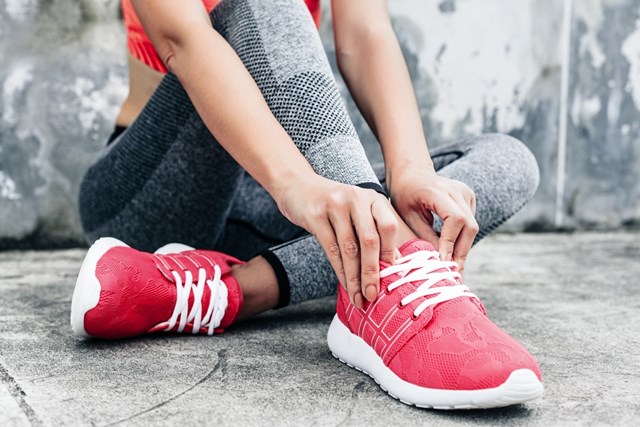
The only “equipment” necessary for walking (unless it’s on the beach) are shoes and chances are you have a pair suitable for the job already. “Walking shoes” have flexible soles and stiff heel counters to prevent side-to-side motion. Normal flat surfaces only require low-heeled shoes that are comfortable, cushioned and lightweight.
FASTEST WAY TO GET SHREDDED ABS
2. Use Your Arms

While it might look silly, exaggerating your arm swing while you walk has additional benefits. It’ll help to speed up your pace, work your upper body and burn up to 10% more calories when compared to a normal arm swing.
To perfect your arm-swing technique, use these tips:
Bend your arms to 90 degrees and maintain this form.
The arm should extend behind the body as far as you can comfortably and naturally.
On the upswing, the hand should rise to the level of the chest.
3. Devise a Great Walking Playlist

Before you even think about lacing up your sneakers, think of the songs you want to hear as you make strides towards a fitter you. Having a great soundtrack to your walk will motivate you to push harder and go farther and the best part is that you probably won’t even notice the extra effort that you end up putting in. Look for songs that are between 75 to 130 BPM—these tempos will help you synchronize your strut to the beat.
 AGORA FITNESS