
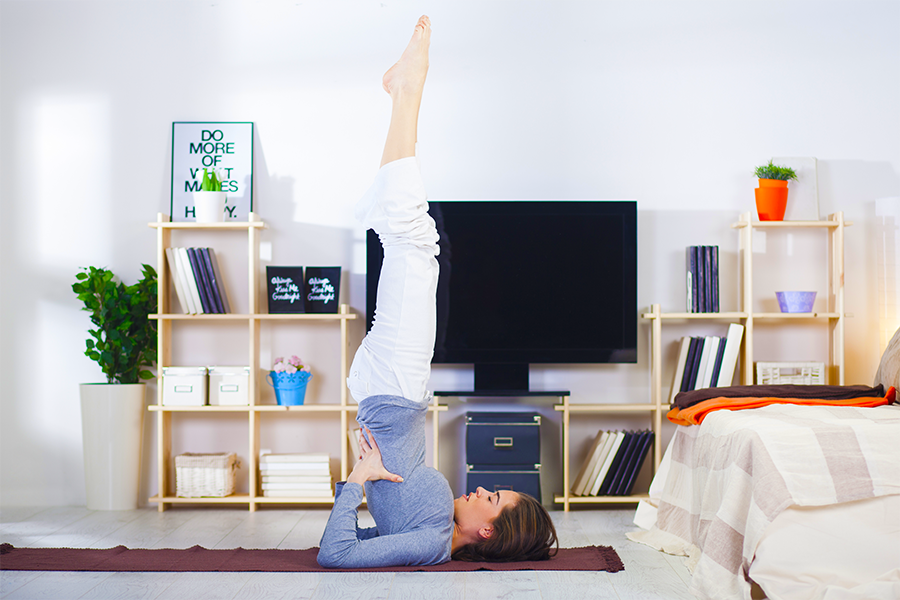
This is the ultimate guide to designing your home yoga studio space. Yoga studio design refers to your color scheme, décor, and furnishings. You can do this yourself or hire an interior designer. The sky is the limit to creating a beautiful and functional home yoga space.
The following are some guidelines for your home yoga studio design – inside and out. Please don’t take them as ironclad rules. They aren’t.


De-clutter.
“Only include items that are functional or beautiful. Remove anything that doesn’t serve either purpose and design your space to suit your specific needs. This will instantly remove distractions, turning your room into a blank canvas.” Get more help paring down in Clearing Clutter for a Simpler Life.
Calm colors.
Go for muted, cooler tones or warm whites. They recede rather than demand full attention. And be sure to use non-toxic paint. Yoga cultivates both mental and physical health, so by choosing eco-friendly products, you can feel good about nurturing yourself and the environment.

Sufficient Ventilation
Ventilation easily tops the list of the primary concerns when designing yoga studios. This is because most of the practices require inhaling fresh air for enhanced spiritual development. By ventilating the room sufficiently, you are guaranteed of uninterrupted oxygen renewal during sessions including when the room is unoccupied.
Adequate Illumination
Lighting is an important aspect when qualifying a yoga studio space; it can significantly influence the quality of one’s session. However, you shouldn’t settle on any lighting. When setting up your home yoga studio, you should use illumination that sets a relaxing tone. In other words, you should employ ambient lighting as an alternative to overly bright lights.
This will help you achieve a serene environment that will sufficiently calm your mind. The softer the illumination, the more relaxed the you will be.

Acoustics
Although there are beliefs that a yoga studio should be completely silent, its disciplines can be effectively developed even in the presence of ambient noise. Ideally, optimal results are obtained when individuals perform yoga classes outside. This is because the sounds of nature from the surroundings facilitate better realization in different practices. When it comes to designing home yoga studios, such sounds, or even smells can be obtained by incorporating indoor gardens or courtyards to attract birds.
you can also incorporate the sound of moving water or flowing wind to give the room a natural feel.
 AGORA FITNESS